Industries / Education
A curriculum is only as good as the teaching it enables.
Designing a programme is the visible half of the work. Whether it lands depends on the teachers, the training, and whether the design survives contact with a classroom in a country the designers have never visited.
This page is a first draft and deliberately short. It is written only from what is already documented and published. Karem leads this practice and is reviewing the page before it publishes, and it will grow with engagement detail she supplies. We would rather leave a gap visible than fill it with something plausible.
Who leads this work
Dr Karem Roitman.
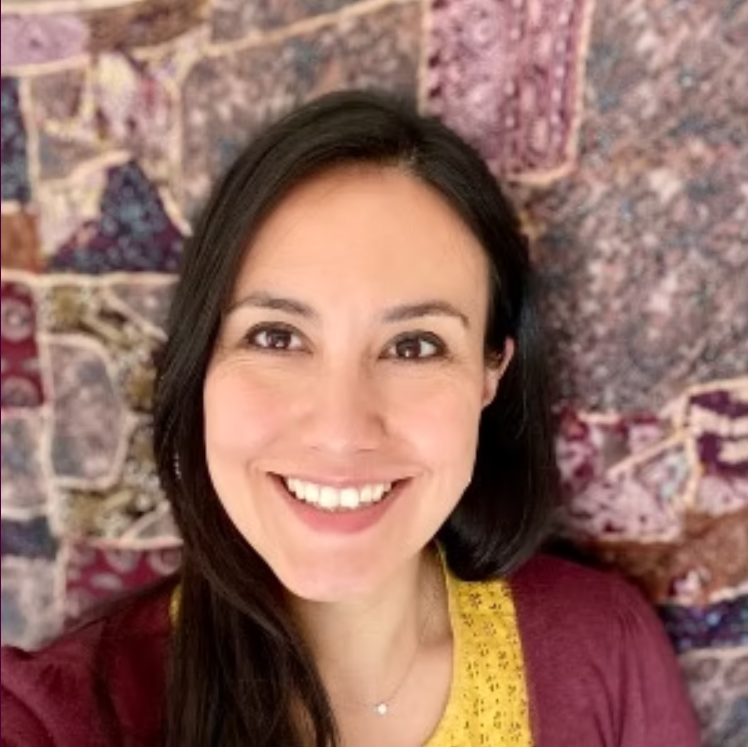
Co-Founder and Managing Partner
London, UK
Karem is a specialist in organisational learning, leadership development, curriculum design and social inclusion, with a DPhil in International Development from the University of Oxford. She has worked across five continents, and designs learning experiences that combine rigorous scholarship with a spirit of playful exploration.
She authored Oxford University Press's Global Skills curriculum, part of the Oxford International Curriculum, which is used in over 100 schools worldwide, and she has trained more than 5,000 educators to develop critical thinking through real-world challenges.
She founded Thinkers Meet Up, a virtual learning community for gifted students, which has served over 500 families with 25 scholars. Her most recent book, Seeking the Perfect World: A Critical Discussion of Global Challenges for the Bright and Curious (Routledge, 2024), is written to help young leaders approach global problems with intellectual clarity and human connection.
She is a sought-after speaker, and much of her practice is the translation of complex ideas into strategies educators and leaders can actually use on a Monday.
The work
Three things we are asked for.
Curriculum and programme design
Designing learning experiences that hold up at scale and across cultures, built around real challenges rather than coverage. The Global Skills curriculum is the largest example, running in over 100 schools internationally.
Teacher and educator development
The part that decides whether a curriculum works. Over 5,000 educators trained to develop critical thinking in their students, which is a different skill from delivering material and has to be taught as one.
Learning organizations, in schools
A school is an organization, and the same principles that build a learning culture in a hospital or a factory apply to a leadership team in a school or a trust. Our approach does not change by sector.
Why this sits alongside the rest
The same argument, in a different building.
Everything on this site rests on a claim about how people learn and how groups change habits. Education is where that claim is least metaphorical.
The methods we use to develop leaders in industry come substantially from the study of learning: deliberate practice, coaching that meets a learner where they are, short cycles with fast feedback, and the understanding that motivation is built rather than exhorted. Having a partner whose doctorate and daily practice are in exactly that field is not a nice symmetry. It is why the adaptive half of our work is grounded in something firmer than a consultant's intuition.
Curious how this would work on your team?
Book a discovery conversation. We will ask what you are trying to achieve and what is getting in the way, which is also how every engagement starts. Practical conversation, no sales pitch.