Industries / Construction
Takt did not begin on a jobsite in the last decade.
It was described, tested, published, and taught more than a century ago, in Polish, by an engineer who used it to double and quadruple the output of factories and construction work. Almost none of it was available in English. We translated it.
This page is here to be useful rather than to settle anything. If you plan construction work and the vocabulary around takt has started to feel like a product rather than a principle, the primary sources are worth an hour of your time, and they are free.
We name no firms, no individuals working today, and no trademarks anywhere on this page. Practitioners will recognize the practices described. The point is not who said what recently. It is that a body of knowledge exists, it is older and deeper than the current conversation, and reading it will make you better at the work.
The history
Rytm, harmonia, and the word that travelled.
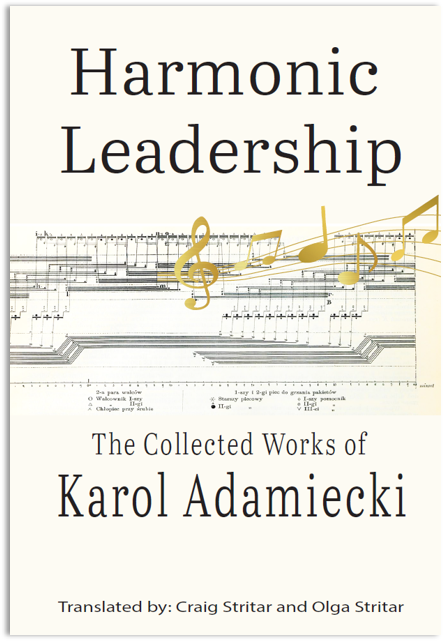
A Polish engineer working in the rolling mills at the turn of the twentieth century, concurrently with and independently of the better known American work, developed a set of principles for organizing production. He created a stir presenting harmonization at an engineering conference in 1903, and spent the following decades publishing, teaching, and testing it in real plants.
He described the synchronization of work using the words rytm, meaning rhythm, and harmonia. His Polish and German contemporaries writing on the same body of work used takt, a shared synonym meaning beat or rhythm in Polish, German, Czech and other languages. Same idea, different word, in print, before the First World War.
He also produced a visual planning instrument, the harmonogram, which addressed shortcomings in the bar charts of the day and anticipated later network scheduling methods. His cycle of organization, planning, execution, control and analysis, predates the plan-do-study-adjust cycle. His cost flow analysis is perhaps the earliest known example of what we would now call a value stream map.
The sentence that matters for construction
First harmonization, then Taylorization. A plant manager, quoted after a tour of Polish factories
On tours of Polish plants, including with the co-author of one of the best known scheduling charts in the English speaking world, observers recorded the same finding repeatedly. Successful transformations began by harmonizing the system, that is, by setting the rhythm of production, before anyone attempted to improve individual job methods. By producing exactly what was needed, when it was needed, neither earlier nor later, output frequently doubled or quadrupled almost immediately. Only once the system was harmonized did attention turn to optimizing individual work cells.
That sequence is the whole practical lesson, and it is the one most often inverted on a construction project. Sequence the trades to a common beat first. Make the handoffs reliable. Then improve how any given trade does its work.
Doing it the other way round produces a project where every trade is individually efficient and the job is still late, because the crews are still waiting on each other. Anyone who has stood on a site watching a fully staffed crew wait for a predecessor has seen the failure mode. It is not a productivity problem. It is a harmonization problem, and it was diagnosed in print in 1903.
Three practices worth a second look
Where current practice tends to drift from the source.
Treating the beat as a schedule
A rhythm is a design parameter for the system, chosen from real demand and real capacity. Where it is applied as a schedule imposed on crews, the number becomes a target to be reported against rather than a constraint the design has to satisfy. The source material is explicit that the rhythm is set by the work, and that the manager's job is to size and coordinate so the work can meet it.
Optimizing tasks before sequencing them
Improving a trade's methods while the handoffs between trades remain unreliable produces local gains that the schedule absorbs without trace. The historical record is consistent on the order of operations, and consistent that reversing it wastes the effort.
Leaving out the third law
The original framework has three parts: harmony of selection, meaning right-sized equipment and crews; harmony of operation, meaning the coordinated rhythm; and harmony of spirit. The third is the one usually dropped. It is not a soft addition. The author identified a direct link between successfully harmonizing selection and operations and the emergence of team spirit and job satisfaction, and he wrote about it at length.
None of this is a criticism of the people doing the work. It is an argument that the foundations are older, better evidenced, and more useful than the current packaging suggests, and that reading them is cheaper than rediscovering them.
Read the sources
Start with these three.
-
Harmonization as One of the Main Foundations of Scientific Management, 1924
The article series that identifies lack of coordination between departments and work cells as the largest waste in industry, leaving some areas idle while others are overburdened. Contains what may be the earliest known cost flow analysis. This is the one to read first if you plan construction work.
-
Harmonograph, 1931 instructional article
Harmonographs were in wide use in European factories by 1931. This is the first instructional article written explicitly for newcomers. It also contains an early form of what would become A3 reporting, advising users to photograph the board before erasing it so that progress is documented, in the normal A3 format.
-
Laws and Principles of Scientific Management
A short summary of the foundational principles: organizational transformation, the laws of economy, the laws of harmony, and value stream principles. The fastest way to see the shape of the whole framework.
All fifteen documents in the Learning Center, free, no email required
Why we can speak to this
Both halves of an unusual combination.
Craig and Olga Stritar produced the English translations linked above, from the Polish. That is the scholarship half.
The other half is a license. Craig holds a California general contractor license, Class B General Building, CSLB number 1156062, issued to Harmonia Vista Builders. First Principles Leadership is a consulting practice and does not perform contracting work, and this credential is stated here as professional background rather than as an offer of construction services.
It matters because the two halves check each other. Reading a 1924 paper about coordinating trades means something different once you have tried to sequence subcontractors on a real job with real weather and real inspections.
Craig, confirm before this page publishes. California requires a licensee to display the license number in advertising. FPL sells consulting rather than construction, so this page carries the number and states plainly that FPL does not perform contracting work. Confirm the wording is how you want it, particularly given that the licensed name is due to change before your first contract.
Curious how this would work on your team?
Book a discovery conversation. We will ask what you are trying to achieve and what is getting in the way, which is also how every engagement starts. Practical conversation, no sales pitch.