Industries / Biotech
Let the scientists do science.
In a lab, operational friction is not an overhead problem. It is time taken directly out of research. Equipment that is down, a reagent that is out of stock, a procedure nobody wrote down: every one of those is an experiment that does not happen this week.
Documented, MBC BioLabs
- 18 months to multi-site We built the training system, the cross-site replenishment, and the maintenance plan a second site needed in order to run like the first. MBC BioLabs, San Carlos
- The new internal benchmark The team built for the newest facility became the company's own reference point for customer experience and problem solving. MBC BioLabs, San Carlos
- Inventory halved, stockouts ended A cross-site kanban ordering system cut inventory by half and eliminated stockouts, through a pandemic supply chain. MBC BioLabs, San Carlos
The engagement
From lean consultant to interim operations director.
MBC BioLabs runs biotech incubators in the San Francisco Bay Area, where early stage companies rent bench space and shared equipment rather than building their own facilities. Craig arrived in November 2019 as a lean consultant and was asked to stay on as Interim Facilities Operations Director, multi-site, through April 2021.
The problem of scaling an incubator is unusual. The customers are companies, the product is uninterrupted research capacity, and the operation has to be replicable, because a second site that works differently from the first is not a second site, it is a second company.
The work was therefore mostly systems: a maintenance plan built to keep equipment operational around the clock, procedures written to CalOSHA requirements, a cross-site replenishment system, and above all a training system that could produce a competent technician in a place where nobody had worked before.
Teams that own their own instructions
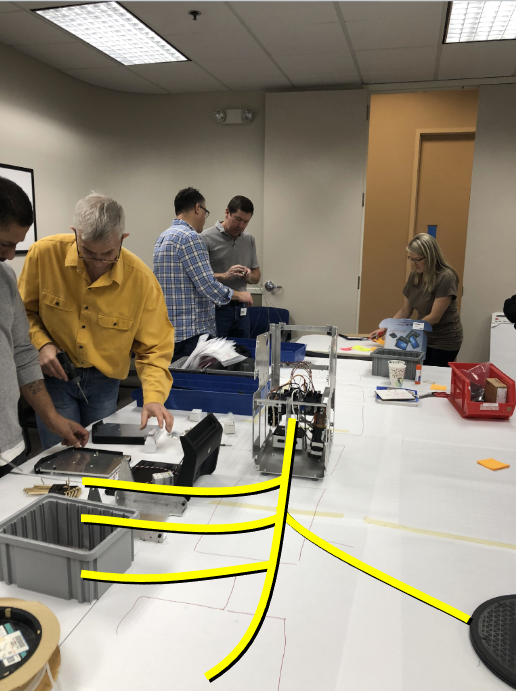
The training system was built on TWI job instruction. What made it hold was who owned it: workers, lead scientists and leadership formed a feedback loop in which the teams authored their own work instructions and owned the hiring, training and certification of technicians.
That is a deliberate choice with a cost. Written by the people doing the work, instructions are correct, get corrected quickly when the work changes, and carry authority on the floor. Written by a consultant, they are accurate on the day they are delivered and wrong within a quarter.
It also made the operation audit-ready. Quality and consistency improved, and readiness for GMP and ISO audits improved with them, as a by-product of people being able to say exactly how the work is done.
What the work involved
Four things a growing lab needs to get right.
Uptime as a designed outcome
A total productive maintenance plan built so shared equipment stays operational 24 hours a day. In an incubator this is the product. A cold room failure is not a facilities incident, it is somebody's research programme.
Replenishment that survives a shock
A cross-site kanban ordering system, which halved inventory and ended stockouts at the same time. Those usually trade against each other. They stop trading against each other when reordering is triggered by consumption rather than by someone noticing.
Compliance without a binder nobody reads
Policies and procedures written to CalOSHA requirements, and structured so the people governed by them are the people who wrote them. Compliance that lives in a binder is compliance that fails an inspection.
Growth readiness in the room where it is decided
Craig participated in annual and startup proposal meetings alongside owners and investors, advising on building replicable systems and preparing strategic updates that supported board and investor communication. Operational reality belongs in that room, not summarized for it afterwards.
Adjacent experience
Instruments as well as labs.
The precision fluidics work described on the Manufacturing page sits directly next to this one. HPLC components, degassers, pumps, valves and manifolds are what a great deal of biotech runs on, and Craig has worked on both sides of that relationship: leading continuous improvement at the manufacturer, then running facilities where the same instruments were in daily use by end users and beta testers.
Knowing how an instrument is built changes what you notice when you watch someone use it.
Where we usually start
A first conversation in biotech.
- What breaks most often, and who currently absorbs it quietly?
- If a technician started on Monday, what would they learn from a document and what would they learn by asking someone?
- When equipment goes down, how long before the right person knows?
- What would have to be true for a second site to run like this one without you being in it?
None of those need a consultant to answer. They tend to be worth asking anyway.
Curious how this would work on your team?
Book a discovery conversation. We will ask what you are trying to achieve and what is getting in the way, which is also how every engagement starts. Practical conversation, no sales pitch.